Exploration, curiosity: The building blocks of kindergarten readiness at Grace Montessori
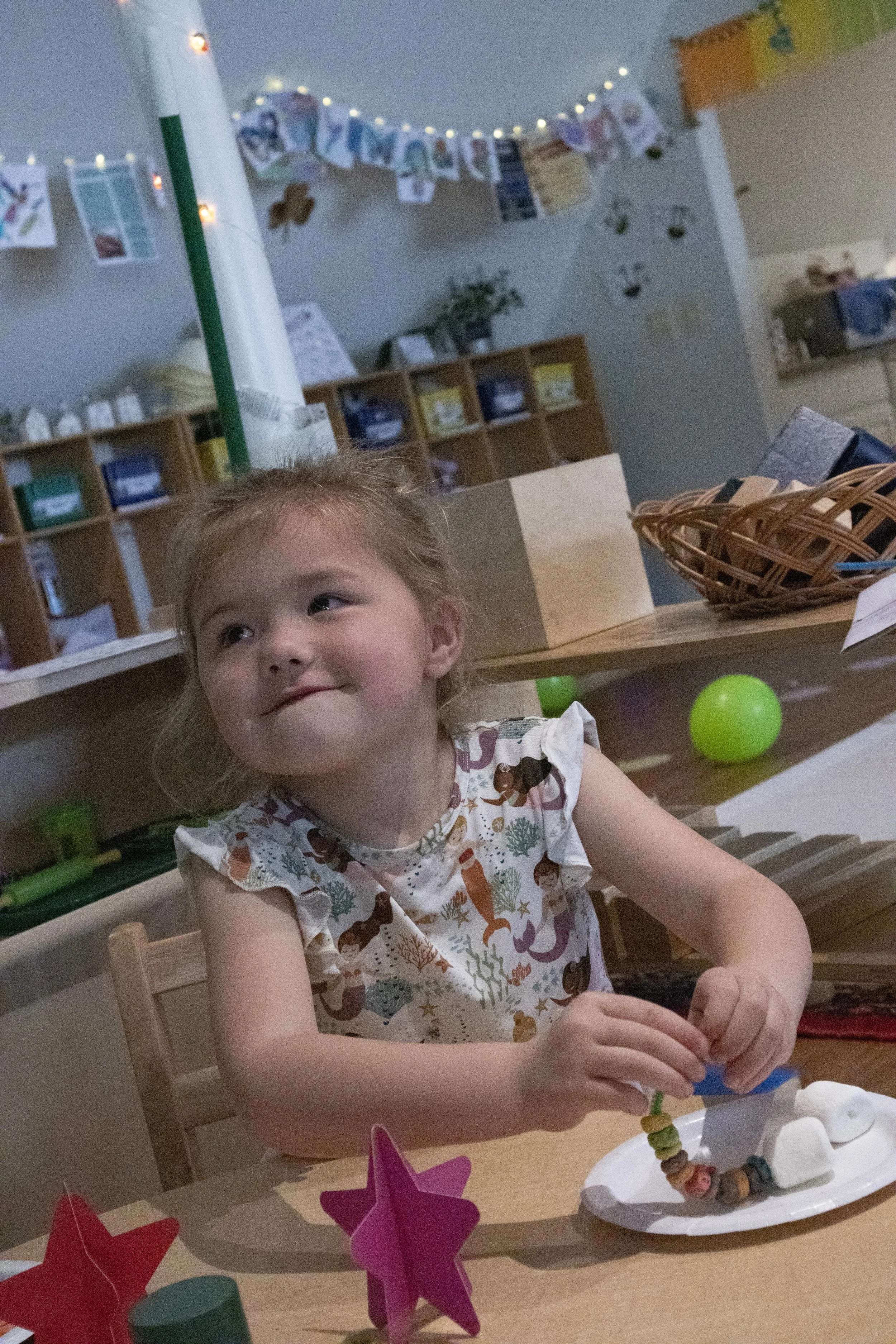
Emersyn Lloyd, 4, works on a macaroni masterpiece in the preschool classroom at Grace Montessori in The Plains.
By Robin Earl for Learning Starts EarlyA visit to Grace Montessori School in The Plains is like a real-time lesson in child development. Four bright preschool classrooms with ten staff members welcome 43 children five days a week. Five families are receiving financial assistance from Learning Starts Early, a Fauquier County nonprofit focused on helping children prepare for kindergarten.
In the “infants” room (8 weeks to 16 months) on a recent visit, one tiny student was sleeping soundly in a crib while classmates sat around a miniature table fingerpainting. Their hands, covered in bright green paint, created prints that they would bring home to mom and dad.
The young toddler room (16 months to 2 ½ years) could be described as gentle chaos. Students were in constant motion, hugging, playing with wooden cars and puzzles – and giggling. The conversation was somewhere between babbling and unintelligible, but the teachers seemed to understand each child’s unique way of communicating. Some children have learned simple sign language to communicate until their language catches up.
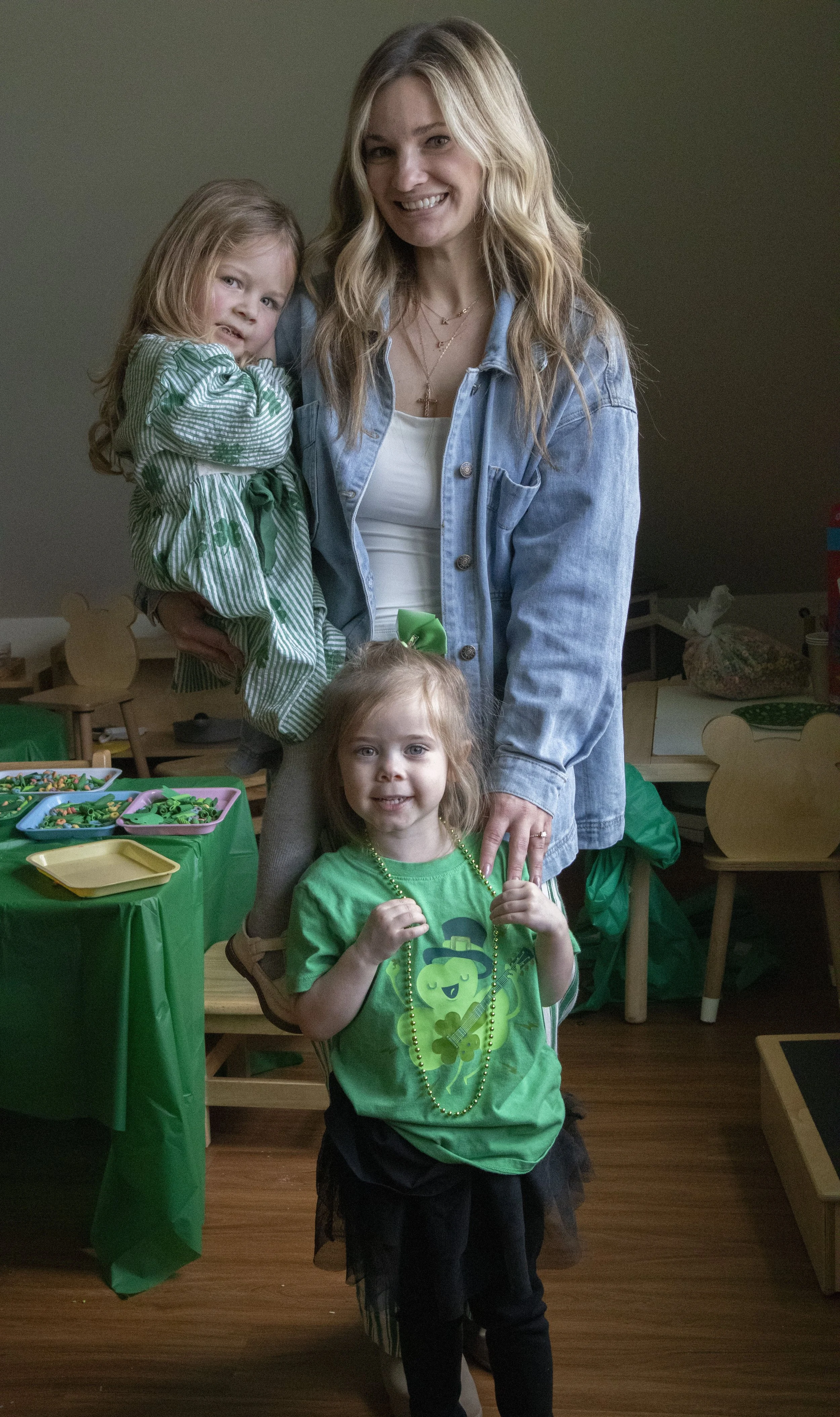
Head of School Jillian Johncox visits the older toddler room at Grace Montesorri Preschool. Daughter Kennedy, 3, immediately asked for a hug, and Claire Reppert, 3, wanted in on the photo-taking too.
Older toddlers (2 ½ to 3 or 4) have their own space as well. The children were immediately drawn to anyone new entering the space and were eager to engage in conversation about everything from a new puppy to their favorite breakfast food.
There is a contrasting dignity in the pre-school room. These 4-, 5- and 6-year-olds were doing the serious business of making macaroni designs, while learning about letters, shapes and colors.
The Montessori philosophy
Jillian Johncox, head of school at Grace Montessori, said the school embraces the Montessori philosophy, but with a nod toward the practical realities of the next step in their development. “Maria Montessori developed her child-centered educational philosophy in the early 1900s. This philosophy focused on individualized educational approaches for each child based on their readiness – while simultaneously building self motivation and independence. We give children the opportunity to explore their natural environment; they develop new skills through observation and experimentation. By teaching practical tasks like washing a window or taking care of an animal, we foster independence, curiosity and confidence.”
Playing outside is not an afterthought. Children spend at least an hour a day on the playground — sometimes three — exploring their surroundings and testing their skills.
Johncox has been at Grace Montessori for three years. She has a bachelor’s degree in early childhood education and special education and a master’s in education administration and leadership. She worked with special education students for eight years in the Fauquier County Public Schools before taking the helm at Grace Montessori.
“When I taught in public school, I could always tell which children had been to preschool. Many of those who hadn’t were already behind in language and literacy. This time in their development is crucial.”
Because of her experience with more traditional education, she understands the importance of preparing the children in her care for the next phase of their academic careers. “Our kids will be moving on to kindergarten in more traditional public or private schools. We make sure they are ready for that next step, that they are able to meet those expectations. We expose them to literacy and math skills so there are no gaps in their learning when they go to kindergarten.”
Johncox said that kindergarten readiness has changed over the years. When her preschoolers graduate to kindergarten, they can identify shapes and letters and can understand rhyming. They can count to 20, write their own names and are able to use scissors. Importantly, they can also listen attentively for at least 15 minutes.
The preschoolers can follow directions and have been exposed to some science concepts. “They are able to ask ‘wh’ questions – who, what, why, where and when,” said Johncox. The children also are exposed to music, art, chapel and physical education.
The head of school said that one local private school admissions director told her that in her experience with county preschools, Grace Montessori students are the most prepared for kindergarten. Johncox said, “When I taught in public school, I could always tell which children had been to preschool. Many of those who hadn’t were already behind in language and literacy. This time in their development is crucial.”
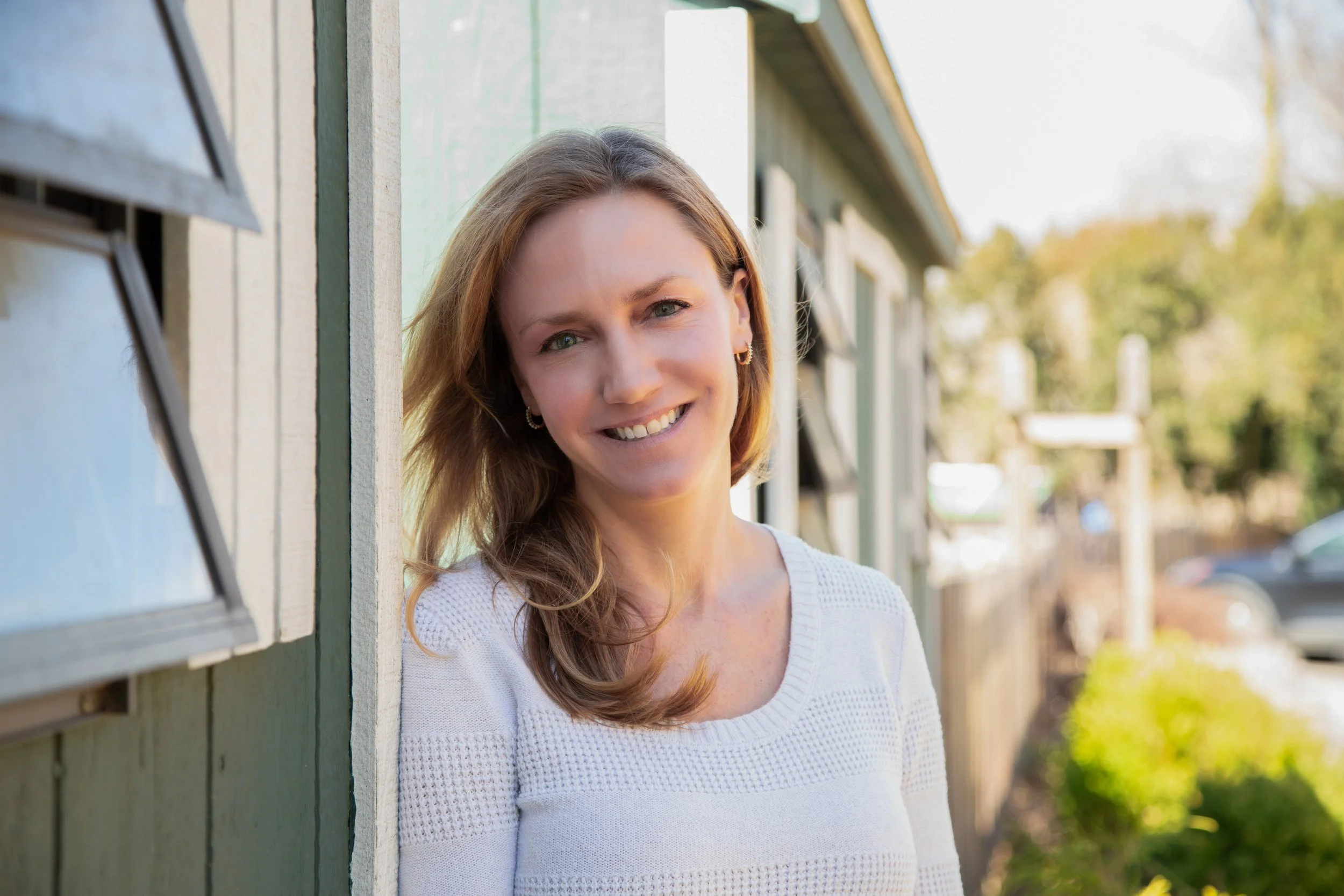
Kristin Gibbs is a Warrenton speech pathologist who works with some of the children at Grace Montessori, supported by Learning Starts Early.
Speech therapy
Even with solid skills, both practical and academic, some children need a little extra help to communicate. That’s why in 2023, Learning Starts Early began supporting speech therapy for some of the students at Grace Montessori. Johncox enlisted Kristin Gibbs, a speech/language pathologist with a practice in Warrenton. Gibbs has worked with three to four children each academic year to address speech and language needs. She knows that speech issues can impact literacy, and the earlier those issues are addressed, the better.
“[W] hen I work with them and I see the light go on, when they make progress and can make themselves understood, their teachers, their parents, we all see the difference.”
Gibbs looks for red flags in the students’ speech – kids who are not able to form words correctly, who leave off the beginnings or endings of words, or are not speaking in sentences. Some are using very few words to communicate by age 2 ½ to 3, she said. Learning Starts Early provides funding for each eligible child to spend a ½ hour with Gibbs each week. She said, “Some kids only need a few months, others need a year or more to make enough progress to start kindergarten on track.” She works with parents to make sure they know how to reinforce the lessons at home.
Poor communication skills can get in the way of students’ learning and hurts their confidence. Gibbs said, “I’ve seen kids try to explain what they need, and when they can’t make themselves understood, they just turn away and say, ‘nevermind.’ But when I work with them and I see the light go on, when they make progress and can make themselves understood, their teachers, their parents, we all see the difference.”
Grace Montessori School by the numbers
Where: 6507 Main St., The Plains
How many? 43 children who attend the school, from 8 weeks old to 6 years old
Supported by: Tuition, fundraisers and contributions from Learning Starts Early, a Warrenton nonprofit (learningstartsearly.org)
Website: gmstheplains.org
Contact: jillian@gmstheplains.org or 540-253-5177
How important is preschool education?
According to 2022 research from Georgetown University, students who attend preschool are more likely to enroll in advanced placement or international baccalaureate courses, less likely to fail courses or be chronically absent, and more likely to graduate high school on time and enroll in college.
They are even more likely to be registered to vote and participate in civic engagement.
About Learning Starts Early
Learning Starts Early was founded at Saint James’ and became an independent nonprofit in 2015. The organization is focused on providing tuition assistance for eligible children to attend high-quality private preschools in Fauquier County. LSE also provides educational materials for our local Head Start program and for summer programs for preschoolers in conjunction with Fauquier FRESH. LSE recruits volunteers — many from Saint James’ — for a Reading Buddies program in local Head Start classrooms.