
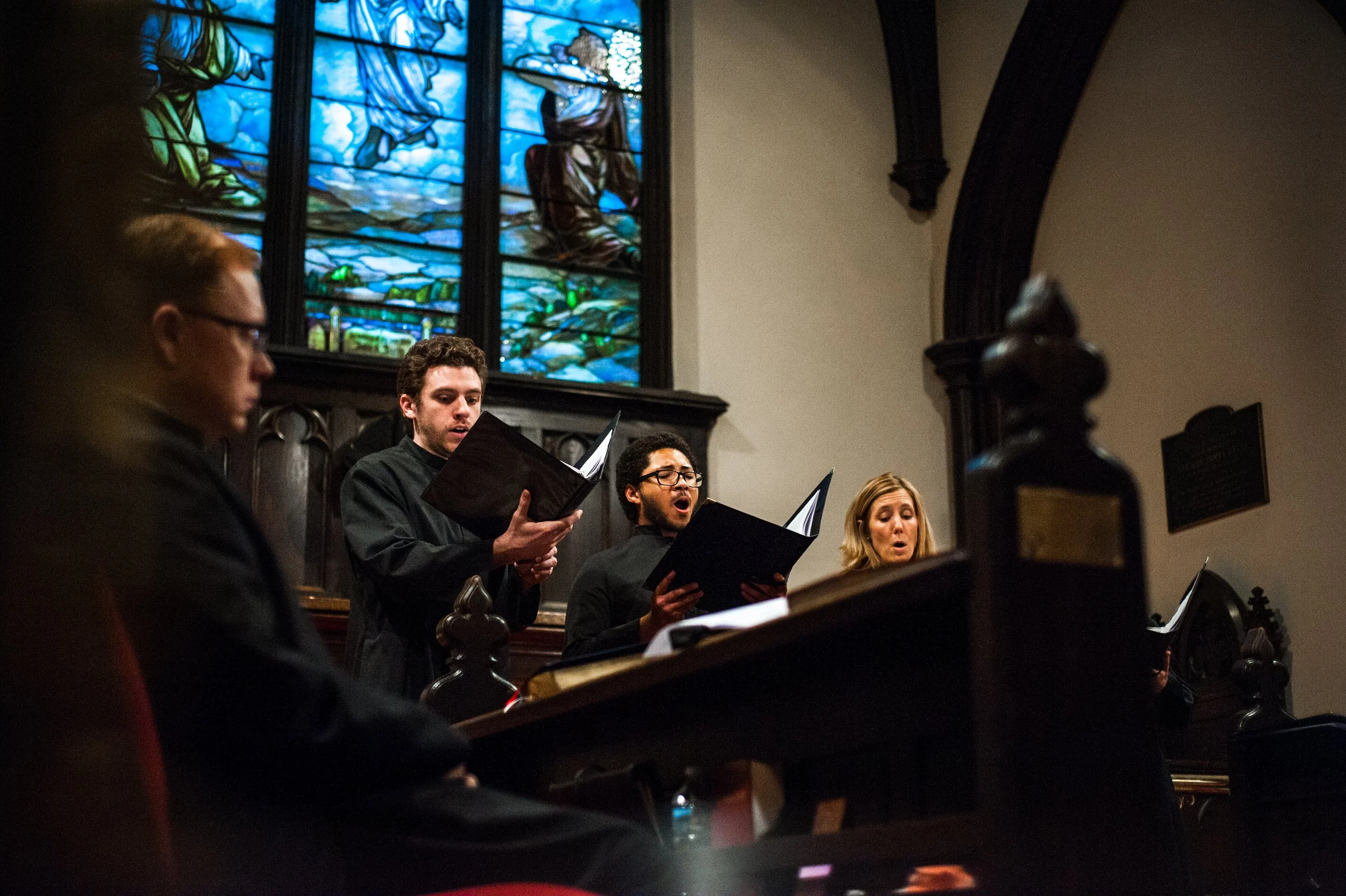
On this weekend set aside to reflect on the life and work of a formidable Civil Rights leader, the Saint James' choir will offer their gifts at this service dedicated to the memory of Martin Luther King Jr. and to celebrating the sacred compositions of Black composers. Through the prayerful tradition of Evensong, which is rooted in the monastic practices of the Middle Ages, the anthems, hymns, readings and prayers will reflect on God's call to love all people as his own creation and to work toward reconciliation when we have failed.
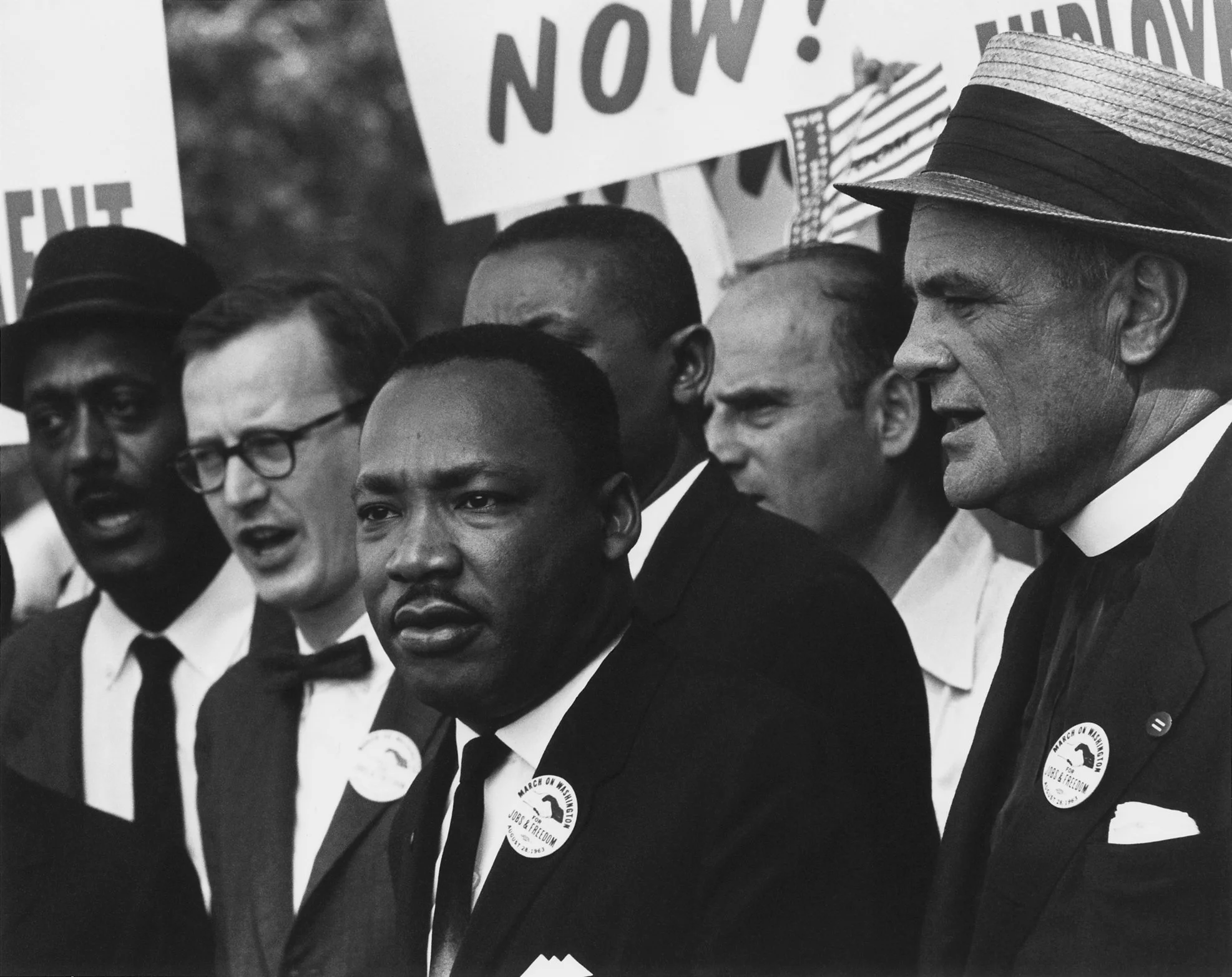
Martin Luther King Jr. appears during the March on Washington for Jobs and Freedom in Washington, D.C., on Aug. 28, 1963. (U.S. National Archives and Records Administration)
More about the service
The choir of Saint James’ Episcopal Church will offer the service of Evensong at 5 p.m. Jan. 18 to honor the memory of Martin Luther King Jr. as well as celebrate the sacred compositions of noted Black composers.
We recall Martin Luther King Jr. as the formidable leader of the Civil Rights movement, but it is often overlooked that music bound the fabric of his being. In Marshall Frady’s book “Martin Luther King, Jr.: A Life,” he describes that as a child, King was captivated by music of his home church, which was led by his mother. As he grew, King joined the junior choir, learned to play the piano and frequently listened to opera. While studying at Boston University, he was introduced to Coretta Scott, as she was pursuing a bachelor’s degree in voice at the New England Conservatory of Music.
The service of Evensong dates to the Middle Ages and features psalms, scripture lessons, sung prayers, choral anthems and hymns. For this service, the bulk of the music selected was penned by Black composers. The liturgy begins with the Phos Hilaron, which praises Christ as the light of God. In this place, “This Little Light of Mine” will be sung. The origins of this children’s hymn are ambiguous, but it was often used as a song of resistance by Civil Rights movements. This arrangement was composed by William Farley Smith (1941-1997), a graduate of the Manhattan School of Music, a researcher and restorer of African-American sacred music, and an editor of the 1989 UMC Hymnal.
The psalm appointed for the evening is Psalm 150, and the musical setting is by Judge Jefferson Cleveland (1937-1986). It is composed in the gospel style and language. Cleveland was highly regarded as a scholar of 20th-century African American congregational song. The choral anthem is a soulful rendition of “Stand by Me,” which was originally composed by Charles Albert Tindley (1851-1933). The Rev. Tindley was fondly referred to as “The Prince of Preachers.” Tindley was refused a formal education but taught himself to read by sounding out letters found on scraps of paper. He was able to develop his literacy skills with the help of a Philadelphia synagogue and later learned Greek via a correspondence course through Boston Theological School. In addition to being regarded as a clergyman, Tindley was a gifted composer of gospel hymns and is recognized as one of the founding fathers of American gospel music.
The service concludes with Doris Akers’ “Lead Me Guide Me.” Akers (1923-1995) was affectionately known as “Miss Gospel Music” due to her mastery in all the aspects of gospel music artistry: vocal performance, composing and arranging, choral directing and accompanying. In 1992, Akers was honored by the Smithsonian Institution as “the foremost black gospel songwriter in the United States.”
As the nation pauses to reflect on a man that helped initiate the change in how we embrace all people, may you find the memorable Hans Christian Andersen quote — “When words fail, music speaks” — a gentle reminder that music can break barriers of age, race, creed and language.
— Jesse Ratcliffe